Author:

  • Vitamin A for Skin – Let’s Discover the Benefits

    Here’s Why You Should Try Retinol based Skincare Products!

    In search of great skin? Aren’t we all? The benefits of taking vitamin A for skin have seen this vitamin soar to cult status in the beauty world – with good reason!

    But it can be so confusing deciding which ingredients to search out and try.

    That’s why it can be very helpful to find out which ingredients have shown up and proven their worth over and over.

    Great! So, what is vitamin A?

    Vitamin A is a fat-soluble vitamin that supports healthy skin, the immune system and vision. It’s important for reproductive health and helps your organs work properly.

    Where do you get vitamin A?

    Does taking vitamin A orally help skin, or does it need to be applied as a topical treatment?

    Well, eating vitamin A-rich foods can certainly help your skin – creating health from the inside out. Healthy skin thrives on a balanced diet full of all the essential nutrients and vitamins we need. Natural sources of vitamin A for skin are worth including regularly in your diet.

    Vitamin A foods good for skin include carrots, kale, tomatoes, spinach, sweet potatoes, broccoli, egg yolks, mangoes and pumpkin.

    So, if you’re not eating many veggies, do vitamin A supplements help the skin?

    Yes, but the effects are more limited than sourcing your vitamins from food or applying vitamin A topically.

    Essentially, topical vitamin A for skin is the best treatment for specific skin concerns like acne, fine lines and wrinkles, UV damage and pigmentation. You can find vitamin A in skincare products as retinol. For more severe challenges, get a stronger prescription-only retinoid from your doctor.

    How does vitamin A help your skin?

    Retinol (the form of vitamin A applied directly to the skin) is a skincare powerhouse. It can drastically improve the appearance of many skin concerns.

    For instance, it strengthens the skin cell barrier. This makes your skin more resistant to irritation and infections.

    Is vitamin A good for oily skin?

    Retinol and stronger prescription retinoids are an excellent product for oily skin.

    In fact, they have potent acne-busting power. Acne often accompanies oily skin because pores get blocked more easily when excess oil, dead skin cells and bacteria build-up.

    Vitamin A increases your cell turnover. At the same time, it removes the junk and gunk, leaving you with fresher, clearer skin.

    What does vitamin A retinol do for your skin aging processes?

    Vitamin A skincare is perfect for nipping the first signs of aging in the bud. It does this by stimulating collagen production.

    Collagen gives structure to your skin but your levels start to decline at some point in your twenties. This decline can be accelerated by exposure to pollution or too much sun.

    The good news is that by using the right products, you can re-spark the collagen production in your skin. You’ll notice that fine lines are filled in and your skin looks firmer.

    Does vitamin A applied to skin reduce UV damage?

    Eating foods rich in Vitamin A provides you with a fabulous antioxidant boost. Antioxidants make you less sun-sensitive and nix free radicals trying to break down your collagen reserves.

    Topical treatments help to heal sun damage you’ve already developed – they decrease the appearance of sunspots and hyperpigmentation.

    Always remember to wear a good broad-spectrum sunscreen while using topical vitamin A skincare products. Some may increase your likelihood of getting sunburnt. Plus, you’re working towards decreasing all the yucky impacts of too much sun. It’s a great idea to avoid further damage from now on!

    Why is vitamin A good for skin tone?

    Vitamin A prompts your skin to produce new cells faster and increases blood supply to the area, which helps sweep away waste products. Areas of uneven pigmentation are reduced.

    Choosing the best vitamin A skincare products

    Excited to start? You may be wondering about the best source of vitamin A for skin.

    While there are many products out there, it’s always best to start with a mild formulation to start with. This gives your body time to get used to the ingredient and reduces the chances of excessive irritation occurring.

    Natural Vitamin A Serum | Amour-A Serum | The Derm Team

    The Derm Team vitamin A serum Armour-A offers a powerful vegan antioxidant formulation designed to strengthen your skin and improve its appearance. Vitamin A, vitamin E and sea buckthorn berry in an oil base are readily recognised and absorbed by the skin.

    How to use vitamin A serum

    Retinol can be used daily on skin but it’s best to build up to that level slowly. Start by introducing the serum into your skincare routine once every 3 nights. Over time you can increase the frequency.

    First, cleanse your face with a gentle cleanser. Using your vitamin A serum directly after cleansing can improve absorption but if you’re experiencing any irritation wait a few minutes.

    Apply 3 to 4 drops gently to your face, décolletage and the backs of your hands. Massage gently upwards.

    Follow with moisturiser to protect and nourish your skin.

    Vitamin A skin cream side effects

    When you first start using retinol you may notice some mild stinging and burning. Your skin may become redder than usual and even scale a bit.

    While this can be irritating and even a bit embarrassing, it’s a sign that the retinol is doing its job. As old skin cells are sloughed off, younger, brighter skin is revealed underneath.

    If these side effects worry you, cut back your applications and apply slightly less serum. Allow your skin time to adjust.

    If you ever feel concerned, experience severe irritation or allergy symptoms, call your health care professional right away.

    To sum up the role of vitamin A in skin health

    Vitamin A is an essential part of your diet if you want to ensure good health, including bright skin.

    To really ramp up your results, however, you can’t beat a topical vitamin A serum. Kiss acne, uneven skin tone, fine lines and pigmentation goodbye!

  • The Ultimate Guide to Vitamin C for Skin

    In the quest for gorgeous, glowing skin, it can be confusing deciding on the best products for your skin. It seems like there’s always a new (usually unpronounceable) formula or ingredient hitting the shelves and promising miraculous results.

    And while it’s true that we’ve made some fantastic breakthroughs in skincare recently, some ingredients are so timeless and effective that they deserve a permanent place in your skincare routine.

    Vitamin C is one of these.

    A dermatologists’ favourite, this little gem is recommended all the time – because it works!

    So if you’re wondering, ‘What is Vitamin C good for?’, we have the answers.

    Let’s take a look at vitamin C and your skin.

    So, what is Vitamin C? 

    Vitamin C is a potent antioxidant. It is a water-soluble vitamin your body cannot produce by itself, so you need to include enough Vitamin C-rich foods in your diet every day. Citrus fruits are great for this, although there’s a whole host of fruits and vegetables that can help you reach your daily requirements.

    What does Vitamin C do for the skin?

    Why is Vitamin C important?

    It fights off free radicals – harmful substances that wreak havoc on your body, causing everything from cancer to premature aging.

    It also helps your body to repair itself and your cells to work normally.

    Is Vitamin C good for your skin?

    So we say that’s a solid, yes, to vitamin c is good for the skin.

    So, if you can eat some oranges or take a supplement to meet your dietary requirements for Vitamin C, is that enough to ensure excellent skin?

    Well, no…

    Although eating Vitamin C-rich foods is essential for your health, if you want to see glowing skin results, you’ll need to apply a Vitamin C-rich product directly to your skin. This is because topically applied Vitamin C is up to 20 times more potent than when it’s taken orally. By using it directly on your skin, you’re telling it where to go to work.

    And go to work it does!

    Vitamin C for skin – what makes it a healthy skin hero?

    Health Benefits of Vitamin C

    If you’re wondering about the health Vitamin C benefits for your skin, there are so many! It’s a powerhouse ingredient that improves many common skin concerns, from sun damage to acne scarring to hyperpigmentation. New users often say they can see a positive difference straight away. Of course, more significant benefits are seen over time, so consistent use is the best way to achieve the results you’re seeking.

    Does Vitamin C help pigmentation and sun damage?

    Yes! Vitamin C is one of the best choices for treating pigmentation or photodamage to your skin.

    Some skin brighteners act by lightening all your skin, producing disappointing results because there’s still a noticeable difference in skin tone. Your skin will appear lighter all over, but still splotchy.

    Vitamin C is different!

    It explicitly targets darker areas and inhibits excessive melanin production in your skin. Melanin is the dark pigment that sometimes shows up as dark spots, blotches or uneven skin tones. Because of this targeting action, you can safely apply Vitamin C to your whole face – it will slow the arrival of new dark spots and even fade existing patches over time.

    It is also a potent antioxidant, strengthening and protecting your skin against further damage. Vitamin C is perfect for daily protection against UV rays and pollution – and as an emergency repair treatment after sunburn, where it will act to reduce inflammation and minimise the chances of dark spots forming.

    Please wait until the initial redness subsides before applying Vitamin C to your skin, and always use a broad-spectrum sunscreen as the final layer in your skincare routine. By using a suncream helps protect the product on your skin, giving it time to work. And let’s be honest, if you’re serious about your skin health and beauty, sunscreen is ALWAYS important.

    Regular use of topical Vitamin C along with daily sunscreen application could even help protect against some precancerous changes in your skin. What a win!

    Does Vitamin C help reduce wrinkles?

    Yes!

    Vitamin C is essential in activating enzymes that boost collagen production in your skin. It’s crucial for cross-linking collagen molecules.

    No Vitamin C = lower collagen levels.

    By applying Vitamin C directly to your skin, it’s highly acidic pH prompts your skin to heal itself. It does this by producing collagen and elastin, both of which are crucial for firm, plump, youthful skin.

    The appearance of sagging skin, loss of firmness, and fine lines and wrinkles are all improved over time with regular use, leaving you looking younger, brighter and more awake.

    Vitamin C side effects

    Like any skincare product, your skin can react to Vitamin C.

    You may feel a slight burning or tingling sensation just after application, but this shouldn’t last very long. If you notice skin irritation, start off slowly, using the product a couple of times a week along with a good nourishing moisturiser.

    If you develop a severe irritation, including any hives or swelling, discontinue use immediately and seek medical advice.

    Vitamin C skincare – how to choose a great product

    There are lots of products on the market offering Vitamin C as an active ingredient. Choose a serum to make the most of your application. Serums provide a concentrated boost of goodness to target your skin type and concerns.

    And of course, what better way to show your skin some love than by nourishing it with a beautiful, natural serum with active ingredients of Vitamin C, Kakadu Plum and Davidson Plum? These native Australian fruits are renowned for their nourishing, revitalising properties. The Derm Team Natural Vitamin C Serum is an absolute must have in your beauty cabinet. The silky formula offers all the fantastic benefits of Vitamin C and no nasties. Are you ready to wake up to bright, youthful, smooth skin?

    How to use Vitamin C on your face

    Use your Vitamin C serum in the morning to get the best free-radical busting benefits. Apply again at night to give your skin all the goodness it needs to rejuvenate while you get some beauty sleep.

    Start by gently cleansing and drying your skin. Apply one or two pumps of serum to your face and décolletage in gentle, upward motions.

    Follow this with a great moisturiser. The Derm Team Moisture Galore Moisturiser is the perfect complement to your serum, working to nourish your skin and prevent irritation.

    And finally, you guessed it – top with a broad-spectrum sunscreen in the morning or followed with your favourite nourishing oil before bed.

    To recap: Here’s why we love Vitamin C skincare

    Vitamin C is a must-have, superstar ingredient that can transform your skin from dull and splotchy to bright and beautiful. It takes on sun damage, pigmentation, fine lines, sagginess, acne scars and enlarged pores, and wins! 

  • Cut the Confusion: Skincare Facts and Myths Exposed

    So, you’re in search of beautiful, healthy skin?

    It only takes a quick Google to confirm what you already suspected – for everything you think is true there are heaps of sources to confirm it – and often just as many saying the opposite.

    You’ll notice the same thing when speaking to friends and family. Everyone has their own beliefs about what – and what not – to do when it comes to skincare.

    To help you figure out the truth, we’ve created a handy guide just for you.

    Check it out – skincare myths and facts exposed!

    Skincare myths and facts

    Myth: All natural, organic skincare products are free of chemicals

    Fact: Technically it’s impossible to create a chemical-free skincare product.

    This is because a chemical is anything that involves or is produced when two or more substances are combined and react somehow – which is basically how skincare products are produced.

    BUT what really makes the difference is whether the product is free of synthetic chemicals. Lab creations are what you’re looking to avoid if you’re keen on natural skincare.

    Added to this, the natural and vegan movement is exploding faster than you can say ‘activated almond,’ with lots of companies keen to jump on board even before truly eliminating all the nasties, so it pays to read and understand the labels.

    Myth: Organic or natural skincare products are less effective than conventional skincare

    Fact: This is a hot topic! You probably know at least one person sitting on either side of the fence on this one.

    The truth is that natural products can be as effective as conventional skincare because it’s really the molecular structure of the ingredients that impact how well they’re absorbed and what they do afterwards. There’s an abundance of natural ingredients that have massive benefits for our skin. Even big brands acknowledge this – it only takes a look at their product descriptions to find the natural ingredients they hero.

    By going straight to natural skincare, though, you skip all the extra synthetic ingredients added, some of which are known endocrine disruptors and carcinogenic. Yuck!

    Myth: Natural ingredients are more likely to cause skin reactions

    Skincare Myths and Facts Exposed

    Fact: Both natural and conventional skincare products have the potential to cause reactions or allergies.

    This is because allergies are a very individual thing. Something that irritates your skin may not have any impact at all on most other people.

    The best advice if your skin is prone to reactions is to add new skincare products one at a time and monitor for irritation. Try to narrow down which ingredients are the troublemakers and steer clear of them.

    Myth: Once you find a skincare range you love, you should ditch your old routine cold-turkey

    Fact: This is a big no-no. Just like a massive change to your diet, a whole new skincare range could be a shock to the system.

    It’s always best to start with the product your skin needs the most right now, or something you’ve just run out of. Add the new product to your existing routine and monitor your skin. Soon you’ll be ready to add the new product, until you’ve completely switched.

    Another skin care myth debunked!

    Myth: Natural skincare products are all vegan and organic

    Fact: Not always!

    Natural products are created using naturally derived ingredients like fruit and plant extracts.

    Organic products are grown without the use of synthetic chemicals.

    Vegan products exclude animal by-products.

    If you’re looking for all these benefits, look for a brand that creates all natural and vegan skincare – like The Derm Team.

    Myth: Antibacterial soap is best for my skin

    Fact: Antibacterial soaps are often very harsh on your skin, so they’re not the right choice for everyday use.

    In addition to leaving your skin dry and irritated, they also kill the good bacteria we all have on our skin. This creates skin imbalances, leaves the door wide open for nasties to colonise and may even contribute to antibacterial-resistant bacteria.

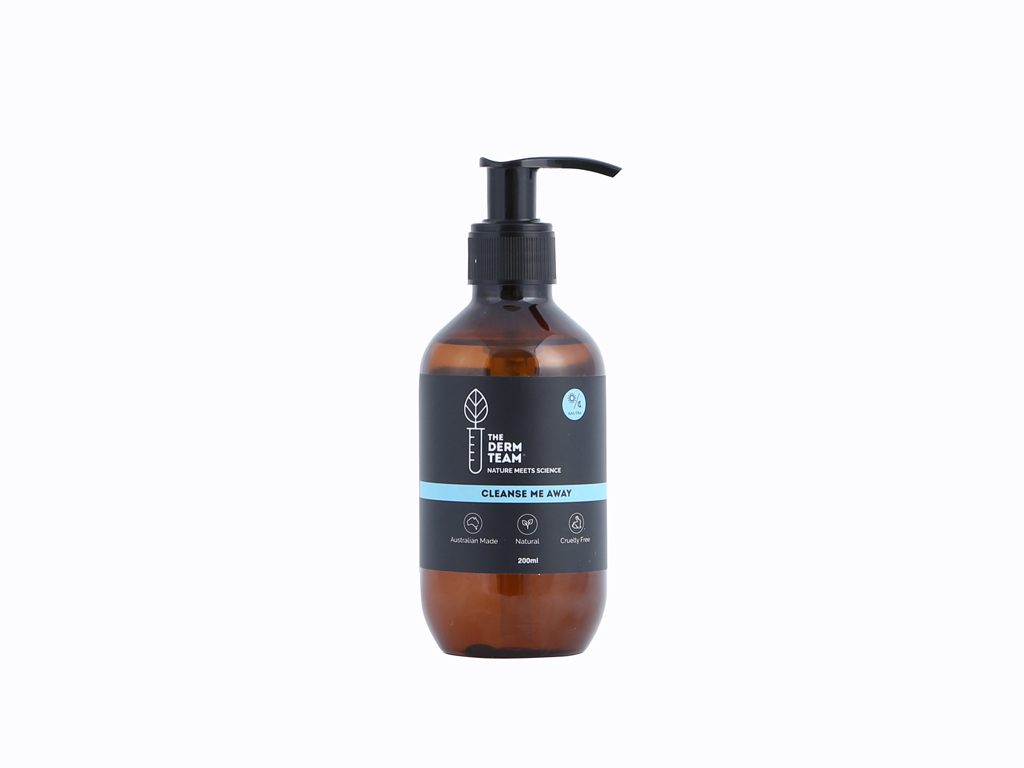
    Natural Face Cleanser Australia | Cleanse Me Away | The Derm Team

    A nourishing gel cleanser like The Derm Team Cleanse Me Away is all you need to get that fresh, clean feeling while showing your skin some love at the same time.

    Myth: Tanned skin is a sign of good health

    Fact: While most people once believed this to be true, we now know a lot more about skin health. Excessive unprotected sun exposure puts you at risk of premature aging, discoloured patches and skin cancer. 

    Although research has shown that careful sun exposure for short periods of time can give you a post-holiday glow safely, its always best to apply a broad-spectrum sunscreen each day to protect against damage.

    And what about Vitamin D, you might be wondering?

    Most people get enough incidental sun along with Vitamin D-rich foods in their diets to keep their levels up. If your levels are low though, you might consider a supplement, especially during winter when light levels are naturally lower. An early morning or evening walk in gentle light can also do the trick.

    Myth: You shouldn’t moisturise oily skin

    Fact: Oily skin absolutely does need moisturiser!

    Despite excess oil, your skin can still get dehydrated. When this happens, it will be flaky and dull along with the oiliness.

    And if you starve your skin of moisture for too long, your body will go into oil-producing overdrive as it attempts to help your dehydrated skin.

    Choose an oil-free moisturiser and use it after cleansing every day.

    Myth: The more expensive the skincare, the better it must be

    Fact: Not always!

    The massive price tag might be a result of some rare and exotic ingredient making waves in the skincare world.

    Often, however, the key ingredients are the same as those in more affordable brands. When this happens, the extra costs may come from celebrity endorsement fees, fancy packaging or extensive marketing campaigns or excess profiteering. In other words, nothing extra that has anything to do with your skin.

    So, there you have it. We debunked some skincare myths and shared some skincare truths to help simplify skincare and get you the results you’re after. 

    If you have a question about a skincare myth or fact we haven’t covered, ask away in the comments section.